Dubai Real Estate Market Study: 97% Occupancy and a Metro Link to Al Maktoum Airport
What was announced on 10 November 2026
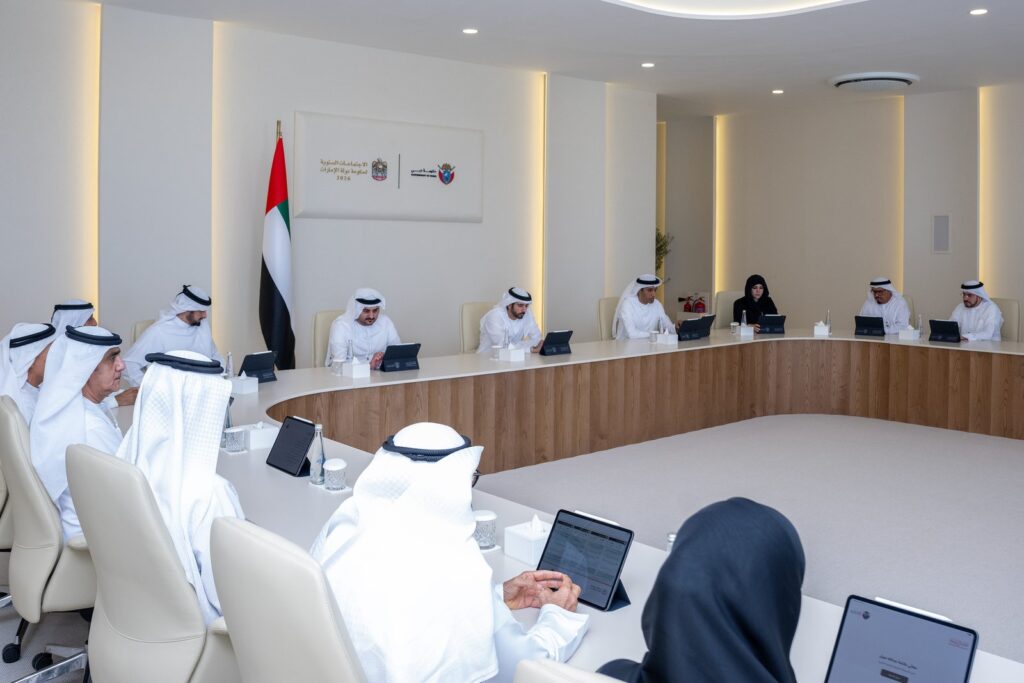
On 10 November 2026, The Executive Council of Dubai approved the findings of a new Dubai real estate market study prepared by the Dubai Land Department (DLD). At the same meeting it approved a AED 2 billion extension of the Dubai Metro to Al Maktoum International Airport City and a AED 9.59 billion plan for community services and facilities up to 2040. The meeting was chaired by H.H. Sheikh Hamdan bin Mohammed bin Rashid Al Maktoum, Crown Prince of Dubai and Chairman of The Executive Council, and held during the UAE Annual Government Meetings 2026. The Government of Dubai Media Office (GDMO) and the Emirates News Agency (WAM) said the projects approved were worth more than AED 11 billion (about USD 3 billion, approximate).
For owners, tenants and buyers, it is one of the most useful official updates of the year: government figures on how full the market is, how much supply is expected by 2030, and where a major transport link goes next. Below we summarise the official releases, explain what each point can mean, and list what to check before you act. We do not forecast prices, rents or returns.
Key figures from the DLD study
The Government of Dubai Media Office summarised the main findings of the study. They are the headline numbers people will search for:
- Residential occupancy: 97%.
- Retail occupancy: 98%.
- Office occupancy: 94%.
- Expected new supply by 2030: about 365,000 new residential units and roughly 1.1 million square metres of office and retail space.
According to the official text, the projections are meant to help developers plan investment, improve quality and speed up delivery, as part of a “data-driven approach” that uses market indicators to keep supply and demand in balance.
Sheikh Hamdan said the sector “continues to demonstrate strong, resilient performance”, and that the findings will guide policy and development decisions made with the private sector.
How the study links to the Real Estate Sector Strategy 2033
The study supports the Dubai Real Estate Sector Strategy 2033. According to the official release, the strategy’s goals are to:
- Double the real estate sector’s contribution to Dubai’s GDP to AED 73 billion (about USD 19.9 billion, approximate).
- Increase the volume of real estate transactions by 70%, bringing the market’s total value to AED 1 trillion (about USD 272 billion, approximate).
- Double the value of real estate portfolios to AED 20 billion (about USD 5.4 billion, approximate).
These are government targets, not guarantees, but they show the direction of policy: more transactions, more transparency and more planning based on data.
What 97% occupancy means for buyers and landlords
Occupancy measures how much existing space is in use. A residential figure of 97% means that, across the market as a whole, very little completed housing stands empty. For buyers and landlords this matters in a few practical ways:
- Tenant demand is broad. High occupancy across the city suggests that completed homes in established areas are generally finding occupiers. That supports the case for buying ready property for rental, but it is a city-wide average. Individual buildings, unit types and communities can perform very differently.
- Ready homes stay relevant. Our recent look at Dubai ready homes in October 2026 found ready property gaining a larger share of DLD-registered sales. A tight occupancy picture helps explain why some buyers want a home they can use or let straight away.
- Retail at 98%. Shops and community retail are almost fully occupied, which is useful context for anyone looking at ground-floor retail units inside residential towers.
Occupancy is not the same as rental yield or price growth. A full building can still be a poor purchase if the price, service charges or maintenance costs are too high. Always compare a specific unit with recent registered transactions and current rental contracts.
365,000 new homes by 2030: reading the supply number
The second headline figure is supply. The DLD study projects about 365,000 new residential units by 2030. The release does not split this figure by community, year or unit type, so it should be read as a city-wide planning number rather than a delivery schedule.
New supply has two sides:
- For end users and tenants, more homes mean more choice, newer buildings and a wider range of communities, including newer areas in south and east Dubai.
- For investors, a growing pipeline means competition between buildings will matter more. Areas where several towers complete at the same time may see more choice for tenants, so location, design, management and amenities become more important.
This is why we encourage buyers to look at completion dates in their target community, not just the city total. The DLD’s open data and the Dubai REST app show registered projects and their completion progress. In a separate announcement on 9 November 2026, WAM reported that Dubai REST received a seven-star rating in the International Best Practice Competition 2026, the top classification. The app’s project tracking and property wallet tools are a practical way to check information yourself.
The Dubai Metro extension to Al Maktoum International Airport City
The second big decision was transport. The Executive Council approved an AED 2 billion (about USD 545 million, approximate) extension of the Dubai Metro. According to GDMO:
- The extension creates a 3-kilometre route with two new stations.
- It links Route 2020 to Al Maktoum International Airport City.
- The project is a collaboration between the Roads and Transport Authority (RTA) and the Dubai Engineering Projects Establishment.
- Services are scheduled to begin in 2031.
- The route will connect to the airport’s West Terminal, linking with the airport express line and Etihad Rail’s high-speed rail network.
GDMO says it should ease travel for passengers, staff and visitors and improve traffic flow on nearby roads.
Why Route 2020 matters
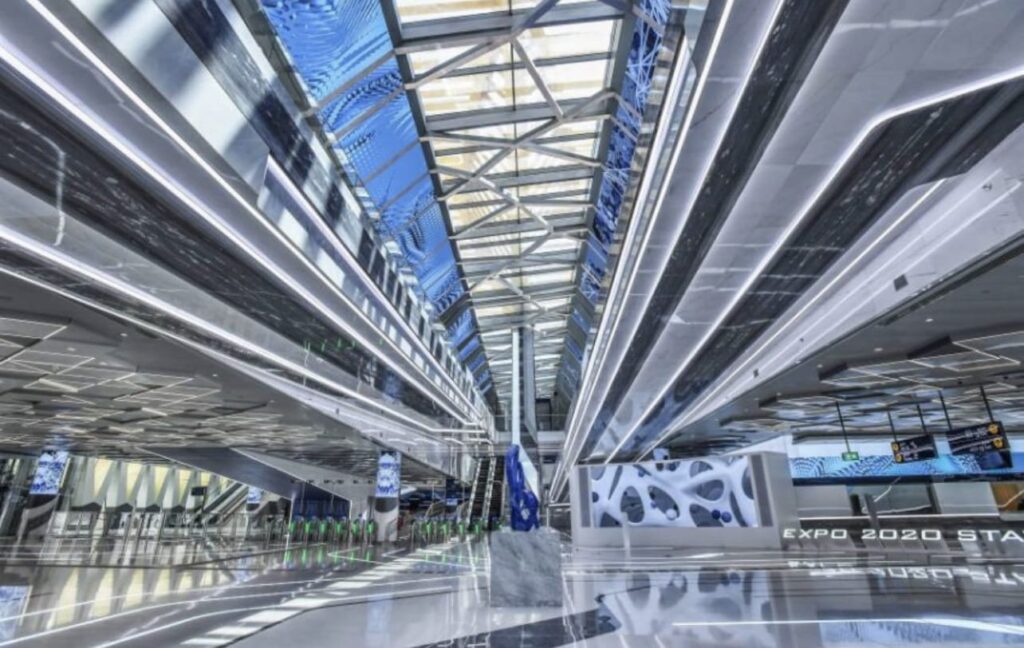
Route 2020 is the Red Line branch that runs from Jebel Ali towards Expo City Dubai. RTA opened it in stages in 2021. GDMO’s June 2021 release lists its stations as Jebel Ali (the interchange with the main Red Line), The Gardens, Discovery Gardens, Al Furjan, Jumeirah Golf Estates, Dubai Investment Park and Expo 2020. Extending this branch to the airport city places these neighbourhoods on a direct rail corridor towards what Dubai plans to be its main airport.
The airport behind the metro decision
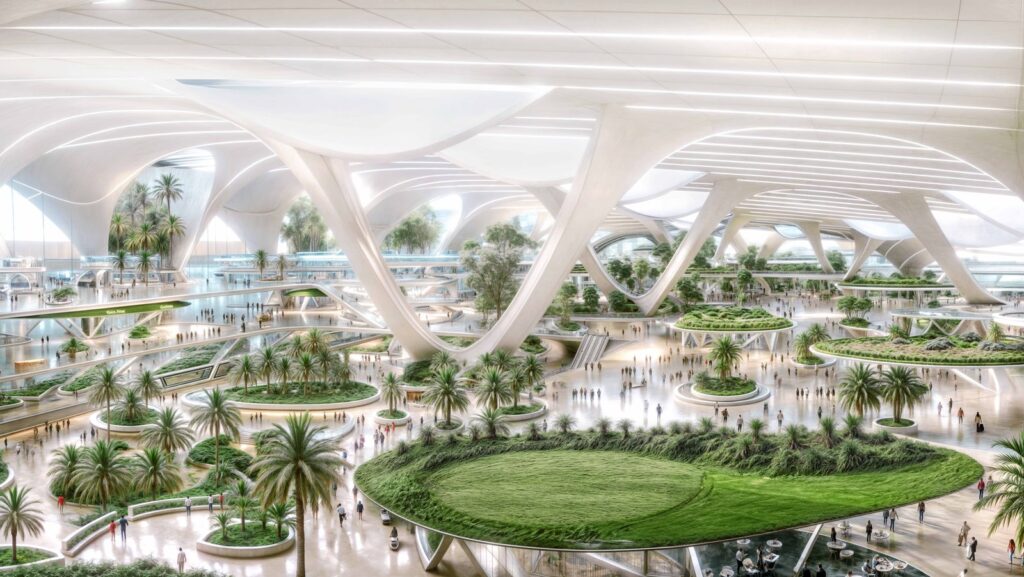
The metro link only makes sense in the context of the airport itself. In April 2024, GDMO reported that H.H. Sheikh Mohammed bin Rashid Al Maktoum approved the designs for a new passenger terminal at Al Maktoum International Airport, with construction costing AED 128 billion (about USD 34.9 billion, approximate). The official release said that:
- The airport will eventually handle up to 260 million passengers a year, with 400 aircraft gates and five parallel runways.
- All operations at Dubai International Airport will move to Al Maktoum International in the coming years.
- Dubai Aviation City Corporation said the project would create workforce and residential demand for more than a million people living and working in Dubai South.
Sheikh Mohammed said at the time that, as an entire city is built around the airport in Dubai South, “demand for housing for a million people will follow”. That statement, together with the new metro budget, is the reason many buyers are now searching for information on property near Al Maktoum airport.
The AED 9.59 billion community services plan
The third approval was a plan to develop community services and facilities through 2040, with a budget of AED 9.59 billion (about USD 2.6 billion, approximate). GDMO says it will:
- Be supervised by the Supreme Committee for Urban Planning in Dubai, in coordination with Dubai Municipality.
- Follow the Dubai Social Agenda 33 and the Dubai 2040 Urban Master Plan.
- Be rolled out in phases, prioritising residential areas for citizens.
- Include facilities for safety, security, healthcare, education and sports, plus amenities for senior Emiratis and spaces for family and community activities.
For residents, the aim is fair access to everyday services across both existing and planned communities. You can read more about the master plan behind this in our article on sustainability and the Dubai 2040 Urban Master Plan.
The meeting also approved an Awqaf Dubai investment policy that targets a AED 10 billion (about USD 2.7 billion, approximate) increase in the value of its real estate portfolio by 2030.
What this means if you are buying in Dubai
Here is how we suggest reading the news, whether you are an end user or an investor:
- Treat the occupancy numbers as market context. They are useful evidence that completed property is being used, but they do not describe any single building. Check the vacancy, rents and service charges for the exact tower or community you are considering.
- Match off-plan timing with infrastructure timing. The metro extension is scheduled for 2031. If you are looking at homes along Route 2020 or in Dubai South, compare each project’s handover date with that timeline, and do not assume any benefit before services start.
- Look at the supply pipeline locally. The 365,000-unit figure is city-wide. Ask how many units are due in your target area over the next few years.
- Use official tools. DLD’s open data and the Dubai REST app show registered transactions, project status and escrow details. Tenancy contracts are now easier to manage through Ejari in the DubaiNow app, as we explained in our DubaiNow Ejari guide.
- Remember the trade-offs. Infrastructure plans can change, construction carries timing risk and returns are never guaranteed. A balanced shortlist usually mixes good current access with realistic future upside.
Some buyers ask whether a purchase can support a UAE Golden Visa. Eligibility depends on the property value and the current rules of the Federal Authority for Identity, Citizenship, Customs and Port Security (ICP), so always confirm with ICP directly.
For more context on how infrastructure shapes demand, see our coverage of the Al Khaleej Street Tunnel opening, and our area guides to Motor City and Jumeirah Village Circle in new Dubai. You can also browse all properties or talk to the Mina Prime Properties team about how these announcements fit your plans.
Sources
- Government of Dubai Media Office: Hamdan bin Mohammed chairs The Executive Council meeting (10 November 2026)
- Emirates News Agency (WAM): Hamdan bin Mohammed chairs The Executive Council meeting, approves major public projects in Dubai worth over AED11 billion (10 November 2026)
- Office of the Crown Prince of Dubai: Executive Council meeting release (10 November 2026)
- Government of Dubai Media Office: Mohammed bin Rashid approves designs of new passenger terminal at Al Maktoum International Airport (28 April 2024)
- Government of Dubai Media Office: RTA opens Dubai Investment Park and Expo 2020 stations on Route 2020 (1 June 2021)
- Emirates News Agency (WAM): Dubai REST achieves seven-star rating in International Best Practice Competition 2026 (9 November 2026)
- Dubai Land Department: Real estate open data
This article is general information based on the official sources above, checked on 11 November 2026. It is not financial or legal advice. Rental income and capital growth are not guaranteed. Project timelines and plans can change. Verify details with the relevant authority, the developer and the Dubai Land Department before you decide.